
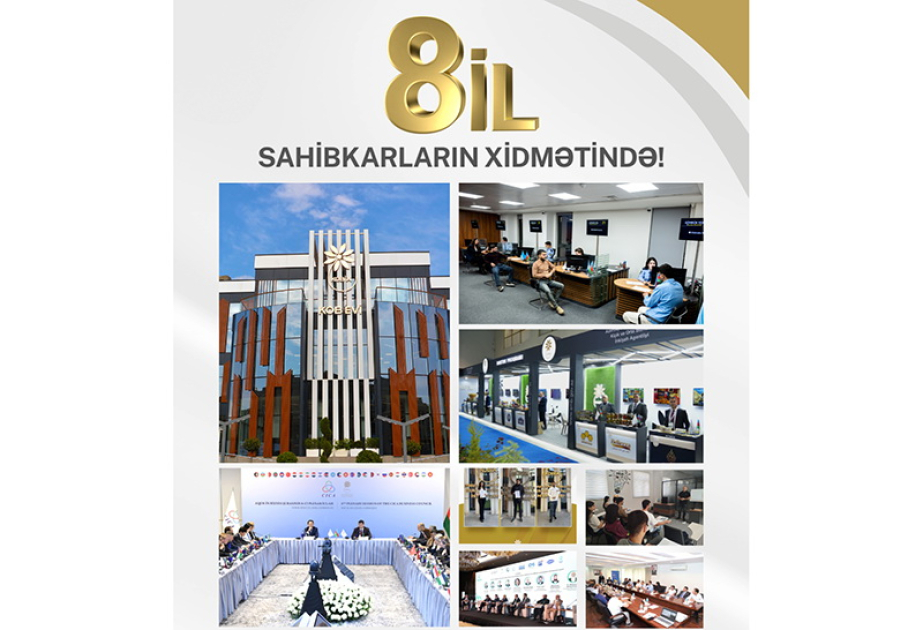
8 Years Since the Establishment of KOBIA
Eight years have passed since the launch of the Small and Medium Business Development Agency (KOBIA), the institution specialized in providing targeted support and services to micro, small, and medium-sized enterprises (SMEs).
Startup.az reports that the Agency was established by the Decree of the President of the Republic of Azerbaijan dated December 28, 2017. As a key indicator of the consistent and systematic state support for entrepreneurship—particularly the SME sector—under the leadership of the President, KOBIA has become an institutional pillar of SME development over the past eight years.
Over this period, an extensive infrastructure network covering Baku and the country’s regions has been formed to ensure more accessible support and services for SMEs. Currently, SME Houses providing “G2B” and “B2B” services in a single space operate in Baku, Khachmaz, Yevlakh, and Shusha. More than 1.4 million services have been delivered to entrepreneurs at SME Houses to date. Preparations for the Ganja SME House have been completed, and it will be launched soon.
Enhancing entrepreneurs’ business knowledge and skills has been a priority for KOBIA. To date, nearly 10,000 free advisory services have been provided at SME Development Centers, 5,200 training sessions have been conducted for 64,800 entrepreneurs, and traditional training mechanisms have been complemented with innovative digital solutions. The SME Model Enterprise established at Azerbaijan Technical University has improved business skills through hands-on training in efficient and cost-effective management. More than 2,200 entrepreneurs have benefited from a video training platform featuring 180 training videos, learning materials, and self-assessment tests.
A network of 48 “SME Friends” operates across 47 cities and districts, including the liberated territories of Lachin, Zangilan, Kalbajar, and Fuzuli, providing on-site services to entrepreneurs. This network facilitates effective coordination with public and private institutions and the prompt resolution of challenges faced by businesses.
To identify SME needs and challenges, KOBIA has established effective communication channels. Nearly 700 sectoral meetings involving over 22,500 entrepreneurs have been held across Baku and the regions. Around 50 public discussions were organized within the framework of KOBIA’s Public Council, and surveys involving nearly 20,000 entrepreneurs were conducted.
Protecting SME interests is a key area of KOBIA’s activity, with numerous entrepreneurs’ rights restored over the past eight years. KOBIA has also obtained international ISO certification for quality management, customer satisfaction, and complaint handling.
Several new support mechanisms have been introduced for SMEs. Approximately 240 SMEs have received “Startup Certificates,” granting three-year exemptions from profit and income taxes for innovative activities. Grants totaling AZN 2.2 million have been allocated to 129 projects in education, science, research, and support areas. Market research studies, retail access support, exhibition participation, and the creation of SME cluster companies have further strengthened the sector.
Significant steps have also been taken toward SME digitalization, including the beta launch of the e-SME House portal, which will become fully operational next year.
Together with partner institutions and the private sector, KOBIA has implemented various social projects, supporting veterans, youth, women entrepreneurs, startups, and socially vulnerable groups. Since 2022, the “Dayaq” Award has been presented to businesses to promote entrepreneurial success and strengthen public-private cooperation.
International cooperation has expanded through the signing of 122 memoranda and agreements with institutions from 34 countries and 27 local and international organizations. Six joint business councils have been established, and more than 15 international events have been organized. Within COP29, nearly 30 partners joined the “Baku Climate Declaration for SMEs’ Green Transition” proposed by KOBIA.
As a result of this systematic support, the number of SMEs increased by nearly 74% between 2018 and 2024, exceeding 424,000. SMEs now account for 99.7% of registered businesses nationwide. Their added value more than doubled to AZN 21.1 billion, employment rose by 47.6% to over 417,800 people, and SME turnover reached AZN 48 billion.
KOBIA’s activities have also received international recognition from organizations such as the OECD, ICSB, and the European Union. In the coming years, KOBIA will prioritize enhancing the effectiveness and accessibility of support services, introducing new mechanisms aligned with business needs, advancing digitalization and green transition, and promoting sustainable business models.